The War With Iran Didn’t Happen Because Kamala Harris Lost
No, The War With Iran Didn’t Happen Because Kamala Harris Lost
In the days since the United States and Israel launched coordinated airstrikes across Iran, a campaign that began on Feb. 28 and has since widened into a regional conflict, social media reacted the way social media does.
Within minutes, timelines across social media platforms were filled with memes and videos. The digital spectacle of war erupted.


There were posts screaming “World War III?” over shaky clips of missiles streaking through the night sky. TikTok creators lip-synced over air-raid sirens and breaking-news alerts. AI videos showed fighter jets streaking across maps with political slogans pasted onto their fuselages. And pro-Trump accounts turned the moment into cinematic propaganda, posting slick video edits of B-2 bombers soaring over Iran while dramatic music swelled in the background.
In that flood of content, it quickly became difficult to tell what was real, what was recycled footage, and what had been generated by AI. The result was the familiar social-media fog of war filled with a chaotic stream of images designed less to inform than to provoke. It hits the nervous system first, spiking fear, urgency, and outrage, long before anyone has time to slow down and ask what is actually happening.
But if the first wave of posts was panic, the second was something else entirely: political vindication.
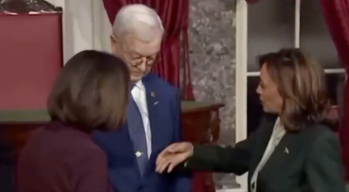
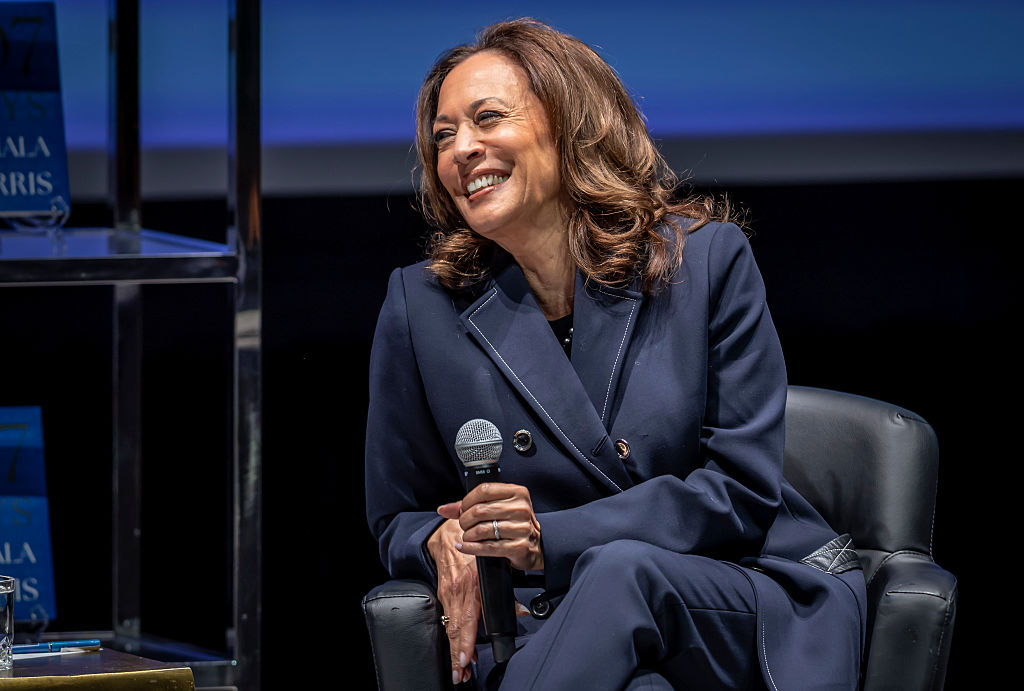
Blue-check pundits and partisan influencers began resurrecting old campaign footage of former Vice President Kamala Harris warning about Iran. Screenshots of Harris calling Iran the United States’ “greatest adversary” circulated with captions like: “Y’all said she was weak.” “Remember this?” “You were warned.” Some posts paired those clips with fresh images of explosions in Tehran. Others reopened 2024 election arguments, suggesting that voters who stayed home or refused to fall in line had ignored a clear warning.
Across Black social media, especially, the format quickly became recognizable: split-screen graphics, ominous music, campaign clips dropped next to fresh footage of explosions in Tehran. The message was simple: Remember this? Y’all were warned. Y’all didn’t listen. Now look.
The implication is clear that if voters had simply listened, if Harris had won, the crisis might have been avoided. It is an emotionally satisfying fantasy, but it is historically shallow. Because the narrative assumes that Iran policy was somehow the decisive issue shaping the 2024 election and that millions of Americans were carefully weighing Middle Eastern geopolitics when they stepped into the voting booth. But the more these posts circulate, the more they reveal a profound misunderstanding of how American foreign policy actually works.
This content flattens decades of bipartisan policy into a single campaign clip. They misrepresent how American foreign policy is actually made. They treat one candidate’s rhetoric as if it could override the machinery of the American empire. And they quietly smuggle in a comforting fantasy that if Harris had won, the United States somehow wouldn’t be standing in the same geopolitical firestorm today.
So, why do folks need to tell themselves this story?
Part of the answer is emotional. War is obviously chaotic and frightening. Elections feel like moments when history could have taken a different path. So when catastrophe unfolds, people reach backward for proof that it might have been avoided. Someone saw it coming. A different vote might have changed everything. Those narratives restore a sense of control.
But they also obscure the deeper reality. If the war results from a single election or from a single candidate being ignored, then the structural forces disappear. Those forces include decades of bipartisan consensus in Washington about Iran, long-standing military alliances in the region, and strategic doctrines carried forward by both Democratic and Republican administrations.
Blaming voters for ignoring a warning is easier than grappling with how American power actually operates in the world. Memes turn a sprawling geopolitical crisis into a tidy morality play: someone warned you, you didn’t listen, and now we’re paying the price. But wars do not erupt because a politician mentioned Iran in a debate. This conflict with Iran sits at the end of a much longer fuse: decades of sanctions, covert operations, proxy wars, regime-change schemes, arms deals, intelligence partnerships, and U.S. military infrastructure spread across the Middle East.
Republicans helped build that architecture. Democrats maintained it. Each administration inherited the machinery and kept the gears turning. Kamala Harris was part of that system, not outside of it.
As vice president, she served in an administration that continued many of the core pillars of U.S. policy toward Iran and the broader Middle East: maintaining sweeping sanctions, sustaining military alliances across the region, reinforcing the strategic partnership with Israel, and supporting the network of U.S. bases and security agreements that project American power across the Persian Gulf. When Harris spoke about Iran as a dangerous adversary, she was not introducing a new doctrine. She was articulating the position that has defined Washington’s approach for decades.
During the 2024 campaign, her rhetoric reflected that same consensus. Harris repeatedly described Iran as a major threat and emphasized that the United States would remain firmly aligned with Israel’s right to defend itself. That language fit squarely within the bipartisan framework that has governed U.S. policy in the region long before she entered national politics.
None of this makes Harris uniquely responsible for the current crisis in the Middle East, but it does complicate the fantasy circulating online that she represented some kind of radical break from the system producing these conflicts. Like every national political figure operating within Washington’s foreign policy establishment, Harris moved inside a set of assumptions about American power that both parties have largely shared: that the United States must dominate the region militarily, contain Iran through sanctions and pressure, and preserve a security order built around American alliances and weapons.
That is the machinery all the memes leave out.
To pretend otherwise erases the deeper story of the long history of Western powers, particularly settler colonial nations, projecting force into the region in the name of security, stability, or democracy. From the 1953 CIA-backed coup in Iran to the invasion of Iraq, from sanctions regimes to drone wars and proxy conflicts, Western power has destabilized a region, reshaped its political terrain, armed its allies, and then continued to express shock when violence erupts again.
When people reduce a regional war to a viral “you were warned” meme, they shrink decades of imperial policy into a personality debate about one election. The result is a comforting story: if the “right” candidate had won, catastrophe might have been avoided. But empire does not turn on the outcome of a single election.
More importantly, if people want to center Harris’ warnings about Iran, the conversation has to include the full record, not just the clips that circulate well on TikTok.
The architecture of American power in the Middle East did not begin with Donald Trump. And it certainly did not begin with Kamala Harris. It stretches back through multiple administrations, multiple wars, and multiple generations of foreign-policy doctrine. The problem is not simply who occupies the White House. It is the system that keeps producing these wars, no matter who wins. Presidents come and go, but the bases remain, the alliances remain, the sanctions remain, and the machinery keeps grinding forward.
Viral clips may feel like an explanation or vindication. But comforting narratives are not the same thing as historical truth.
SEE ALSO:
Understanding The US And Iran’s Long And Complicated History
Everything We Know About The Conflict In Iran
MAGA Is Turning On Donald Trump Over Strikes Against Iran
No, The War With Iran Didn’t Happen Because Kamala Harris Lost was originally published on newsone.com